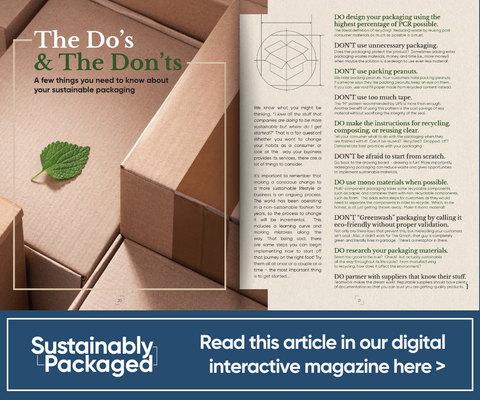
We know what you might be thinking, “I love all the stuff that companies are doing to be more sustainable but where do I even get started!?” That is a fair question! Whether you want to change your habits as a consumer or the way your business provides its services, there are a lot of things to consider.
It’s important to remember that making a conscious change to a more sustainable lifestyle or business is an ongoing process. The world has been operating in a non-sustainable fashion for years, so the process to change it will be incremental. This includes a learning curve and making mistakes along the way. That being said, there are some steps you can begin implementing now to start off that journey on the right foot! Try them all at once or a couple at a time – the most important thing is to get started.
DO design your packaging using the highest percentage of PCR possible
The literal definition of recycling! Reducing waste by reusing post-consumer materials as much as possible is a must.
DON’T use unnecessary packaging
Does the packaging protect the product? Sometimes adding extra packaging wastes materials, money, and time (I.e., more money!) when maybe the solution is a redesign to use even less material!
DON’T use packing peanuts
I hate packing peanuts. Your customers hate packing peanuts. If someone says they like packing peanuts, keep an eye on them…. If you can, use void fill paper made from recycled content instead.
DON’T use too much tape
The “H” pattern recommended by UPS is more than enough. Another benefit of using this pattern is the cost savings of less material without sacrificing the integrity of the seal.
DO make the instructions for recycling, compost, or reuse clear
Tell your consumer what to do with the packaging when they are finished with it! Can it be reused? Recycled? Drop-off? Demonstrate best practices with your packaging.
DO use mono materials when possible
Multi-component packaging takes some recyclable components such as paper and combines it with a non-recyclable component such as foam. This adds extra steps for customers as they would need to separate the components in order to recycle. Which, to be honest, I’m just throwing away. Make it mono material!
DON’T be afraid to start from scratch
Go back to the drawing board – drawing is fun! More importantly, redesigning packaging can reduce waste and gives opportunities to implement sustainable materials.
DON’T Greenwash you’re packaging by calling it eco-friendly without proper validation
Not only are there laws that prevent this but misleading your customers isn’t cool. Also, it didn’t work for the Grinch, that guy is completely green and literally lives in garbage. There’s a metaphor in there.
DO have thorough research on packaging materials
Seem too good to be true? Check! Is it actually sustainable all the way throughout its life cycle? From manufacturing to recycling, how does it affect the environment?
DO partner with suppliers that know their stuff
Teamwork makes the dream work! Reputable suppliers should have plenty of documentation so that you can trust you are getting quality products.